
Wonach suchst du?

Metalldächer sind dank ihrer Haltbarkeit, langen Lebensdauer und strukturellen Festigkeit eine der besten Oberflächen für die Installation von Solarmodulen. Unabhängig davon, ob es sich um ein Stehfalzdach, Wellblechdach oder Trapezblechdach handelt, ist die Verwendung des richtigen Montagesystems und der richtigen Installationsmethode entscheidend, um Sicherheit, wasserdichte Leistung und langfristige Zuverlässigkeit zu gewährleisten.
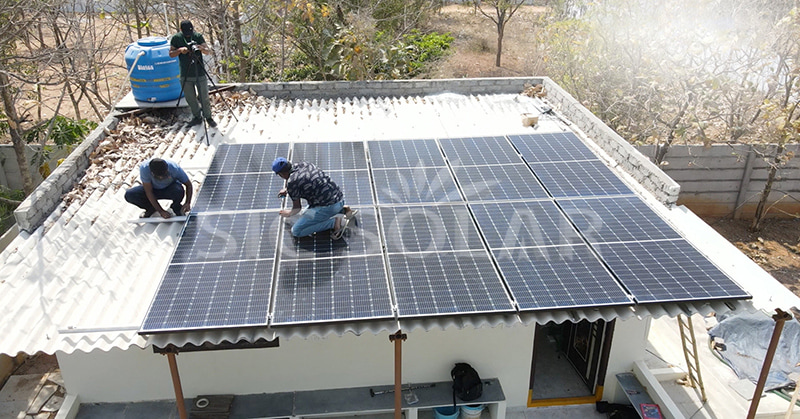
Der Installationsprozess beginnt mit einer gründlichen Dachinspektion. Installateure bewerten den Zustand des Dachs, die Tragfähigkeit und den Profiltyp, um die geeignetste Montagelösung zu bestimmen. Eine genaue Vermessung des Dachs hilft außerdem, die Anordnung der Module für eine maximale Sonneneinstrahlung zu optimieren und gleichzeitig Hindernisse wie Entlüftungen oder Dachfenster zu vermeiden.
Der nächste Schritt ist die Auswahl der geeigneten Montagekomponenten. Unterschiedliche Metalldachprofile erfordern unterschiedliche Befestigungsteile. Stehfalzdächer verwenden typischerweise nicht durchdringende Falzklemmen, die direkt an den erhöhten Falzen befestigt werden, ohne in das Dach zu bohren. Wellblech- und Trapezblechdächer erfordern häufig L-Füße, Dachhalterungen oder Mini-Schienen, die mit selbstbohrenden Schrauben und wasserdichten Dichtscheiben befestigt werden.
Sobald die Montagepunkte markiert sind, werden die Halterungen oder Klemmen gemäß dem technischen Entwurf installiert. Bei Dächern, die Befestigungselemente erfordern, werden wasserdichte Dichtungen und EPDM-Gummidichtungen verwendet, um vor dem Eindringen von Wasser zu schützen. Der richtige Abstand zwischen den Befestigungspunkten ist wichtig, damit das Montagesystem örtlichen Wind- und Schneelasten standhalten kann.
Nachdem die Dachbefestigungen gesichert wurden, werden Aluminiumschienen installiert und sorgfältig ausgerichtet. Die Schienen bilden die Grundlage der Solaranlage, daher ist eine genaue Positionierung sowohl für die strukturelle Stabilität als auch für die Ausrichtung der Module entscheidend. Installateure überprüfen, ob die Schienen waagerecht sind, bevor sie zur nächsten Phase übergehen.
Anschließend werden die Solarmodule auf den Schienen platziert und mit Endklemmen und Mittelklemmen befestigt. Diese Komponenten halten die Module sicher an ihrem Platz und ermöglichen gleichzeitig die durch Temperaturänderungen verursachte Wärmeausdehnung. Auf alle Befestigungselemente sollte das richtige Anzugsdrehmoment angewendet werden, um die Herstellervorgaben zu erfüllen.
Die elektrische Installation folgt auf die mechanische Montage. Die Solarmodule werden mit DC-Kabeln verbunden, und die Verkabelung wird ordentlich zum Wechselrichter geführt. Erdung, Kabelmanagement und elektrische Schutzvorrichtungen werden gemäß den örtlichen Elektrovorschriften installiert, um einen sicheren und zuverlässigen Betrieb zu gewährleisten.
Vor der Inbetriebnahme des Systems führen die Installateure eine abschließende Prüfung durch. Sie kontrollieren die Ausrichtung der Module, überprüfen, ob alle Befestigungselemente korrekt angezogen sind, prüfen die wasserdichte Abdichtung um Dachdurchdringungen und bestätigen, dass die elektrischen Verbindungen ordnungsgemäß funktionieren. Dieser Qualitätskontrollprozess trägt dazu bei, langfristige Leistung und Sicherheit zu gewährleisten.
Die Qualität des Montagesystems spielt eine bedeutende Rolle für die Installationseffizienz und die Langlebigkeit des Systems. Hersteller wie SIC Solar, ein Unternehmen, das sich auf die Herstellung und Lieferung von Photovoltaik-Montagesystemen spezialisiert, bieten eine breite Palette von Metalldach-Montagelösungen an, darunter Stehfalzklammern, L-Füße, Mini-Schienen und Dachhalterungen. Diese Produkte wurden entwickelt, um die Installation zu vereinfachen und gleichzeitig zuverlässige strukturelle Unterstützung für verschiedene Metalldachtypen zu bieten.
Mit sorgfältiger Planung, professioneller Installation und hochwertigen Montagekomponenten können Solarmodule sicher auf Metalldächern installiert werden, um über Jahrzehnte hinweg eine stabile Erzeugung erneuerbarer Energie zu liefern und gleichzeitig die strukturelle Integrität sowie die Wetterbeständigkeit des Dachs zu erhalten.



 IPv6 Netzwerk unterstützt
 Deutsch
  English
 español
 português
 Nederlands
 العربية
 日本語
日本語 한국의
한국의 Melayu
 Tiếng việt