
Wonach suchst du?

Flachdächer Dächer zählen zu den gängigsten Oberflächen für gewerbliche und industrielle Solaranlagen. Unter den verschiedenen Montageoptionen sind Ballast-Solarmontagesysteme weit verbreitet, da sie eine praktische Lösung ohne Dachdurchdringung bieten. Ob sie jedoch die beste Wahl darstellen, hängt von der Gebäudestruktur, den Umgebungsbedingungen und den Projektanforderungen ab.
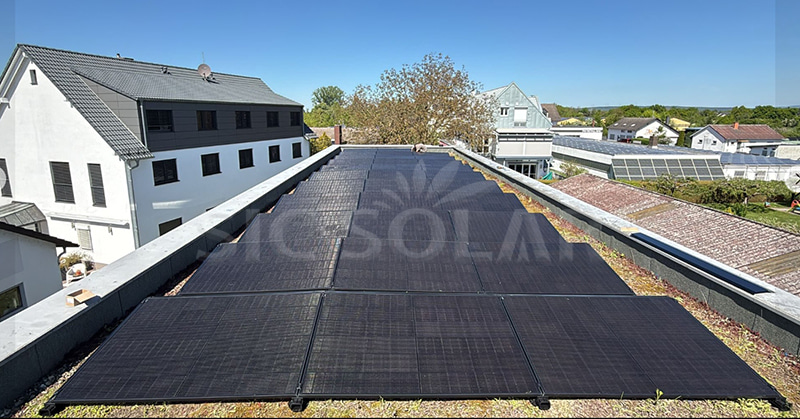
Ein Ballast-Montagesystem für Solarmodule hält diese mithilfe ihres Gewichts und nicht durch direkte Dachdurchdringung an ihrem Platz. Betonblöcke oder andere schwere Ballastmaterialien werden auf der Montagekonstruktion platziert, um Windkräften entgegenzuwirken und die Stabilität zu gewährleisten. Diese Methode ist besonders bei Flachdächern beliebt, da sie die Dachabdichtung vor Beschädigungen schützt.
Einer der größten Vorteile von Ballastsystemen ist die nicht-penetrierende Installation. Da in den meisten Fällen kein Bohren in das Dach erforderlich ist, wird das Risiko von Wasserschäden deutlich reduziert. Dies ist besonders wichtig für Gewerbegebäude, bei denen die Dachstabilität oberste Priorität hat. Gebäudebesitzer bevorzugen Ballastsysteme häufig, weil sie die baulichen Veränderungen am Dach minimieren.
Ein weiterer Vorteil ist die höhere Installationseffizienz. Ballastsysteme lassen sich im Vergleich zu vollflächigen Dachdurchdringungssystemen in der Regel schneller installieren, da sie weniger Befestigungspunkte auf dem Dach benötigen. Modulare Bauweisen vereinfachen zudem die Montage und machen sie somit auch für große Dachprojekte geeignet.
Ein weiterer Vorteil ist die flexible Anordnung der Paneele. Die Ballastmontagesysteme lassen sich je nach Projektplanung an unterschiedliche Neigungswinkel und Paneelausrichtungen anpassen. Einige Systeme nutzen eine Südausrichtung für maximale Energieerzeugung, während andere eine Ost-West-Konfiguration verwenden, um mehr Paneele auf der Dachfläche unterzubringen.
Trotz dieser Vorteile sind Ballastsysteme nicht immer die optimale Lösung für jedes Flachdach. Eine wichtige Einschränkung ist die Dachlastfähigkeit. Da das System für seine Stabilität auf zusätzliches Gewicht angewiesen ist, muss das Dach ausreichend tragfähig sein, um den Ballast, die Solarmodule und die Montagekonstruktion zu tragen. Ältere Gebäude oder Leichtbaudächer verfügen ohne Verstärkung möglicherweise nicht über die erforderliche Tragfähigkeit.
Die Windverhältnisse beeinflussen auch die Eignung des Systems. In Regionen mit hohen Windgeschwindigkeiten oder Hurrikanen benötigen Ballastsysteme unter Umständen zusätzliches Gewicht oder hybride Befestigungsmethoden, um die Stabilität zu gewährleisten. Übermäßiger Ballast kann die Dachlast weiter erhöhen, weshalb statische Berechnungen besonders wichtig sind.
Auch die Entwässerung und die Dachwartung müssen berücksichtigt werden. Ein angemessener Abstand und eine durchdachte Anordnung der Ballastblöcke sind notwendig, um zu verhindern, dass diese die Wasserableitung behindern. Die Monteure müssen ausreichend Freiraum für die regelmäßige Dachinspektion und -reinigung gewährleisten.
Die Materialqualität spielt eine entscheidende Rolle für die Langzeitleistung. Vorschaltgeräte-Montagesysteme werden üblicherweise aus Aluminium und verzinktem Stahl gefertigt, um Korrosion und Witterungseinflüssen zu widerstehen. Hochwertige Komponenten tragen dazu bei, die strukturelle Zuverlässigkeit über Jahrzehnte hinweg zu gewährleisten.
Hersteller wie SIC Solar Sie bieten Lösungen für die Flachdachmontage an, darunter Ballastsysteme für eine effiziente Installation und hohe Stabilität. Ihre Photovoltaik-Montageprodukte sind so konstruiert, dass sie Dachschutz, Windbeständigkeit und Installationsflexibilität optimal ausbalancieren und Projektentwicklern die Anpassung an unterschiedliche Flachdachbedingungen ermöglichen.
In manchen Fällen kommen Hybridsysteme zum Einsatz, die Ballast und Dachdurchdringungen kombinieren. Diese Konstruktionen reduzieren die benötigte Ballastmenge und verbessern gleichzeitig die Windbeständigkeit. Die Wahl hängt von den örtlichen Bauvorschriften, den Umgebungsbedingungen und den Anforderungen der Dachkonstruktion ab.
Ballast-Montagesysteme für Solaranlagen sind oft eine ausgezeichnete Wahl für Flachdächer, da sie die Dachhaut schützen und die Installation vereinfachen. Die optimale Lösung hängt jedoch letztendlich von Faktoren wie der Dachlast, den Windverhältnissen und der Projektplanung ab. Eine sorgfältige statische Prüfung und die Auswahl des richtigen Montagesystems sind unerlässlich für sichere und langlebige Solaranlagen.



 IPv6 Netzwerk unterstützt
 Deutsch
  English
 español
 português
 Nederlands
 العربية
 日本語
日本語 한국의
한국의 Melayu
 Tiếng việt