
Wonach suchst du?

Erdschrauben Erdschrauben sind aufgrund ihrer schnellen Installation und geringeren Umweltbelastung eine beliebte Wahl für die Fundamentierung von Solaranlagen auf dem Freigelände. Sie bieten eine praktische Alternative zu herkömmlichen Betonfundamenten und werden häufig in Solaranlagen unterschiedlicher Größe eingesetzt. Wie bei jeder Fundamentmethode können jedoch auch bei Erdschrauben Probleme auftreten, wenn die Standortbedingungen nicht im Vorfeld sorgfältig geprüft werden.
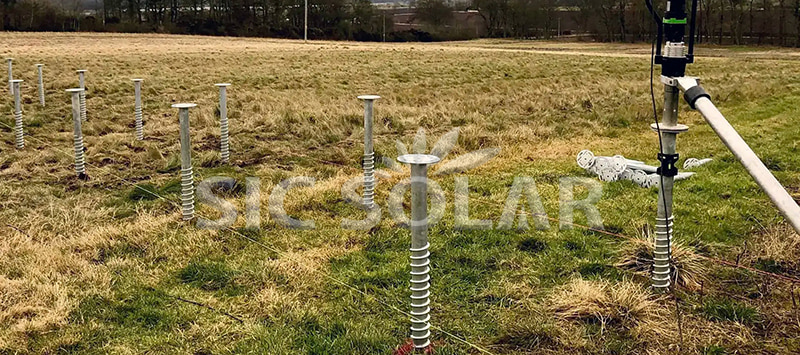
Eine häufige Herausforderung bei Erdankern besteht darin, dass der Boden ungeeignet ist. Sie funktionieren gut in vielen Bodenarten wie Lehm, Sand und Mischböden, aber sehr steiniger Untergrund oder Gebiete mit flachem Felsgestein können die Installation erschweren. Liegen große Steine knapp unter der Oberfläche, dringt der Schraubstock möglicherweise nicht tief genug ein. In solchen Fällen müssen die Monteure gegebenenfalls den Fundamentstandort verlegen oder nach alternativen Fundamentoptionen suchen.
Ein weiteres potenzielles Problem besteht darin, dass die Bodenschrauben nicht hinsichtlich ihrer Tragfähigkeit korrekt ausgewählt werden. Größe, Länge und Durchmesser der Schrauben müssen auf die Bodenart sowie das Gewicht und die Belastungen, denen die Solaranlage ausgesetzt sein wird, abgestimmt sein. Die Verwendung ungeeigneter Schrauben kann die Stabilität des Fundaments gegenüber Wind- und Seitenkräften beeinträchtigen. Daher sind eine sorgfältige statische Berechnung und Bodenuntersuchungen vor Beginn der Installation unerlässlich.
Korrosion ist in bestimmten Umgebungen ein wichtiger Faktor. Erdanker bestehen in der Regel aus Stahl und sind feuerverzinkt, um Rost zu verhindern. In rauen Umgebungen wie Küstengebieten oder Regionen mit sauren Böden kann jedoch ein zusätzlicher Korrosionsschutz erforderlich sein, um die Langlebigkeit der Erdanker zu gewährleisten. Die Wahl hochwertiger Materialien und Beschichtungen trägt zu einer längeren Lebensdauer des Fundaments bei.
Die Qualität der Installation ist ebenfalls entscheidend. Die Schrauben müssen in der richtigen Tiefe und gerade eingeschraubt werden, um die Stabilität der Konstruktion zu gewährleisten. Sind die Schrauben schief oder nicht tief genug eingeschraubt, wird die Solaranlage nicht gleichmäßig gestützt. Mit dem richtigen Werkzeug und erfahrenen Installateuren lassen sich solche Probleme vermeiden.
Bodenbewegungen spielen an manchen Standorten eine weitere Rolle. In Regionen mit lockerem Boden, Frost-Tau-Wechseln oder hoher Luftfeuchtigkeit kann sich der Boden im Laufe der Zeit verschieben. Dies kann zu Stabilitätsproblemen führen, wenn die Schrauben nicht für diese spezifischen Bedingungen ausgelegt sind. Ingenieure begegnen diesem Problem häufig, indem sie längere Schrauben verwenden oder die Einbautiefe anpassen.
Es ist außerdem wichtig, dass die Erdungsschraube fest mit der Solarmontagekonstruktion verbunden ist. Die Verbindung muss so konstruiert sein, dass sie alles sicher hält. Viele Hersteller bieten mittlerweile Systeme an, bei denen Fundament und Montageteile einfach zusammenpassen. Beispielsweise Firmen wie SIC Solar Wir bieten Solarmontagelösungen an, die reibungslos mit Erdschraubenfundamenten funktionieren und so die Installation vereinfachen und das System zuverlässiger machen.
Trotz dieser möglichen Herausforderungen lassen sich die meisten Probleme mit Erdschrauben durch gute Planung, Bodenuntersuchungen und die Auswahl der richtigen Produkte vermeiden. Bei fachgerechter Ausführung mit hochwertigen Komponenten und solider Ingenieursleistung bieten Erdschraubenfundamente eine stabile und effiziente Unterstützung für eine Vielzahl von Solaranlagen.



 IPv6 Netzwerk unterstützt
 Deutsch
  English
 español
 português
 Nederlands
 العربية
 日本語
日本語 한국의
한국의 Melayu
 Tiếng việt