
Wonach suchst du?

Bei Solaranlagen auf Dächern, insbesondere auf Ziegeldächern, ist der Solardachhaken eine der wichtigsten Komponenten. Obwohl er klein ist, spielt er eine entscheidende Rolle, um die Photovoltaikmodule sicher zu befestigen und gleichzeitig die Dachkonstruktion zu erhalten.
Solardachhaken Es handelt sich dabei um Montageelemente zur Befestigung von Solaranlagen auf Schrägdächern, insbesondere solchen, die mit Ziegeln wie Ton- oder Betonziegeln gedeckt sind. Sie werden üblicherweise unter den Dachziegeln montiert und direkt an den Dachsparren oder Tragbalken befestigt. Nach der Befestigung ragt der Haken über die Ziegeloberfläche hinaus und dient als Befestigungspunkt für die Montageschienen.
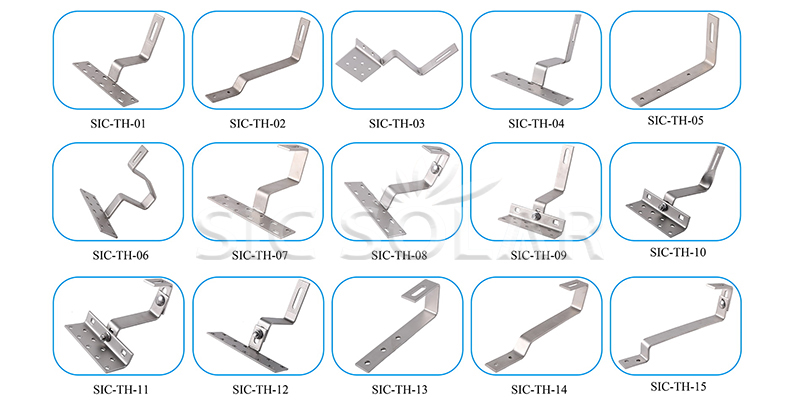
Die Hauptaufgabe von Solardachhaken besteht darin, eine stabile und zuverlässige Verbindung zwischen der Dachkonstruktion und dem Solarmontagesystem herzustellen. Anstatt direkt durch die Dachziegel zu bohren, was zu Rissen oder Undichtigkeiten führen könnte, ermöglichen Dachhaken den Installateuren, das System durch Verankerung an der darunterliegenden Konstruktion zu sichern. Dies schützt die Dachdeckung und gewährleistet gleichzeitig eine hohe mechanische Stabilität.
Eine weitere wichtige Funktion der Dachhaken ist die Gewährleistung der Wasserdichtigkeit. Bei der Montage werden die Dachziegel vorsichtig angehoben, um den Haken zu positionieren, und anschließend wieder aufgesetzt. Dank seiner speziellen Form umschließt der Haken den Ziegel lückenlos. Gegebenenfalls sind kleinere Anpassungen oder das Abschleifen des Ziegels erforderlich, um einen optimalen Sitz zu gewährleisten. Dieses Verfahren trägt dazu bei, die Wasserdichtigkeit des Daches zu erhalten.
Auch die Dachhaken für Solaranlagen tragen zur Lastverteilung bei. Solarmodule und Montagesysteme erhöhen das Gewicht des Daches, und Umwelteinflüsse wie Wind und Schnee erzeugen zusätzliche Kräfte. Die Dachhaken übertragen diese Lasten von den Montageschienen auf die Dachsparren, die für die Aufnahme der statischen Belastung ausgelegt sind. Die korrekte Platzierung und der richtige Abstand der Haken gewährleisten eine gleichmäßige Lastverteilung über das Dach.
Ein weiterer Vorteil ist die Einstellbarkeit. Viele Dachhaken sind höhenverstellbar oder mit Langlöchern versehen, sodass die Montageschienen präzise ausgerichtet werden können. Diese Flexibilität ist besonders wichtig bei unebenen Dachflächen oder unterschiedlich dicken Dachziegeln. Sie trägt dazu bei, dass die Solarmodule gerade und stabil installiert werden.
Die Materialqualität ist für die langfristige Funktionsfähigkeit entscheidend. Dachhaken werden üblicherweise aus Edelstahl oder Aluminium gefertigt, was ihnen Festigkeit und Korrosionsbeständigkeit verleiht. Da sie über viele Jahre den Witterungseinflüssen ausgesetzt sind, tragen langlebige Materialien dazu bei, die strukturelle Integrität zu erhalten und den Wartungsaufwand zu reduzieren.
Hersteller wie SIC Solar Wir bieten eine breite Palette an Solardachhaken für verschiedene Dachziegelarten und Montageanforderungen. Unsere Produkte zeichnen sich durch zuverlässigen Halt, einfache Montage und Kompatibilität mit diversen Solarmontagesystemen aus. Dank durchdachter Komponenten optimieren Installateure Effizienz und Sicherheit bei der Installation.
Solardachhaken sind ein wesentlicher Bestandteil von Solarmontagesystemen für Ziegeldächer. Sie ermöglichen eine sichere Befestigung, schützen die Dachkonstruktion und gewährleisten die Stabilität der Photovoltaikmodule unter verschiedenen Umweltbedingungen. Damit sind sie eine unverzichtbare Komponente moderner Dachsolaranlagen.



 IPv6 Netzwerk unterstützt
 Deutsch
  English
 español
 português
 Nederlands
 العربية
 日本語
日本語 한국의
한국의 Melayu
 Tiếng việt